7 Days Left

Managing Toxic and Other Employees Who Have Attitude Issues

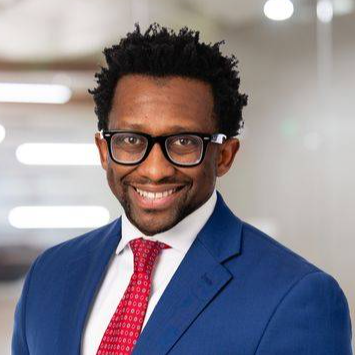
Live Webinar Human Resources | Officially presented by - Pete Tosh
Date: Tuesday, February 10, 2026 | Duration: 90 Minutes
Time: 01:00 PM EST 12:00 PM CST 11:00 AM MST 10:00 AM PST

Most organizations have employees who, on occasion:

  • Complain & gossip excessively
  • Use inappropriate language
  • Are mildly insubordinate

But Toxic Employees have interpersonal styles that demonstrate a pattern of counterproductive work behaviors. While Emotionally Intelligent employees are aware of their feelings & those of others exhibit a pattern of appropriate self-management.

The toxic employee problem is surprisingly prevalent, with research showing:

  • 95% of employees have & 64% are currently working with a toxic employee
  • 50% of employees have thought of quitting, & 12% did because of a toxic employee
  • 25% of employees have reduced their work effort due to a toxic employee
  • 20% of employees feel they are a target weekly, & 10% of employees see toxic behavior daily

Toxic employees cause significant overt, covert, people-related & financial damage with their visible behavior just being the tip of the iceberg. For example, in one organization, the day a former employee left the organization is considered one of their annual holidays.

Areas Covered:

Human & Financial Costs Resulting from Toxic Employees

Toxic Employees Create:

  • Chaos & unnecessary complexity
  • Overt damage
  • Covert damage
  • Strife, stress & emotional damage
  • Productivity, quality & financial losses

The A, B, C’s Related to Toxic Employees

  • Employee attitudes
  • Employee behaviors
  • Consequences that managers can exert

The Psyche of a Toxic Employee

  • Frequently seen toxic behaviors
  • Utilize ‘star status’ & technical expertise to intimidate & manipulate
  • Chameleon who knows who to flatter & who he/she can abuse. They turn their toxicity on & off depending on the impression they want to make
  • Three common forms of toxic behavior

Common Reactions to Toxic Employees That Frequently Don’t Work

  • Restructuring his/her job to accommodate the toxic employee
  • Tolerating toxic employees who bring rare expertise or experience
  • Not assertively seeking feedback from employees as to whether there is toxic behavior in the workplace
  • Not communicating to all employees the specific behaviors that will not be tolerated, with associated consequences

Effective Approaches for Addressing & Preventing Toxicity

Organization-wide strategies:

  • Making positive interpersonal behavior an organizational value
  • Evaluating interpersonal behavior as a part of the performance appraisal system
  • Training leaders in how to address toxic behavior.
  • Using behavior-based interview questions to screen toxic applicants. Exit interviewing to identify any toxic behavior in the workplace.

Departmental & team strategies:

  • Defining appropriate interpersonal interactions with behavior-specific descriptions & standards
  • Using team discussions & role plays to clarify the application of the behavioral descriptions & standards
  • Utilizing a 360-degree feedback process to assess the work environment

One-on-one strategies:

  • Stating explicitly that the behavior is not acceptable & why
  • Describing both the unacceptable & acceptable behavior
  • Asking the employee to commit to & describe how he/she will change his/her behavior
  • Frequent, targeted counseling feedback
  • Executive coaches
  • Progressive discipline
  • Termination

But even terminations are not a cure-all because the:

  • Toxic-enabling people & organizational culture tendencies may remain
  • Employees may still be resentful of the way they were treated by the employee & the time it took the organization to react
  • Expertise & experience of the toxic employee are lost.

Who Should Attend?

  • Managers
  • Directors
  • Presidents
  • Human Resource Professionals
  • Owners
  • Anyone with managerial or leadership responsibility.

Pete Tosh

Pete Tosh is the Founder of The Focus Group, a management consulting and training firm that assists organizations in sustaining profitable growth through four core disciplines:

  • Implementing Strategic HR Initiatives
  • Maximizing Leadership Effectiveness
  • Strategic Planning
  • Enhancing Customer Loyalty

The Focus Group has provided these consulting and training services to manufacturing and service organizations across the U.S., Canada, Europe, and the Middle East. Pete has worked closely with the leadership teams of organizations such as Exxon, Brinks, EMC, State Farm, Marriott, and N.C.I. YKK and Freddie Mac

Prior to founding his own firm 25 years ago, Pete had 15 years of experience — at the divisional and corporate levels — in Human Resource and Quality functions. Pete held leadership positions — including the V.P. of Human Resources and Quality — with Allied Signal, Imperial Chemical Industries, Reynolds Metals, Charter Medical, and Access Integrated Networks.

Pete holds a B.A. degree in Psychology from Emory and Henry College and Masters's degree in both Business Administration and Industrial Psychology from Virginia Commonwealth University. Pete is also co-author of Leading Your Organization to the Next Level: the Core Disciplines of Sustained Profitable Growth.

Order Now!

Need a Order Form?

New Year Offer
$20 Discount
Use Code Join20